
Which Comes First: The Land or the House?

Every new construction buyer around here eventually asks some version of the same question: do you find the land first, or do you find the house plans first?
It sounds like a scheduling question. It isn’t. It’s the first real decision of the entire build, and plenty of people have already made it — wrong — before they ever think to ask.
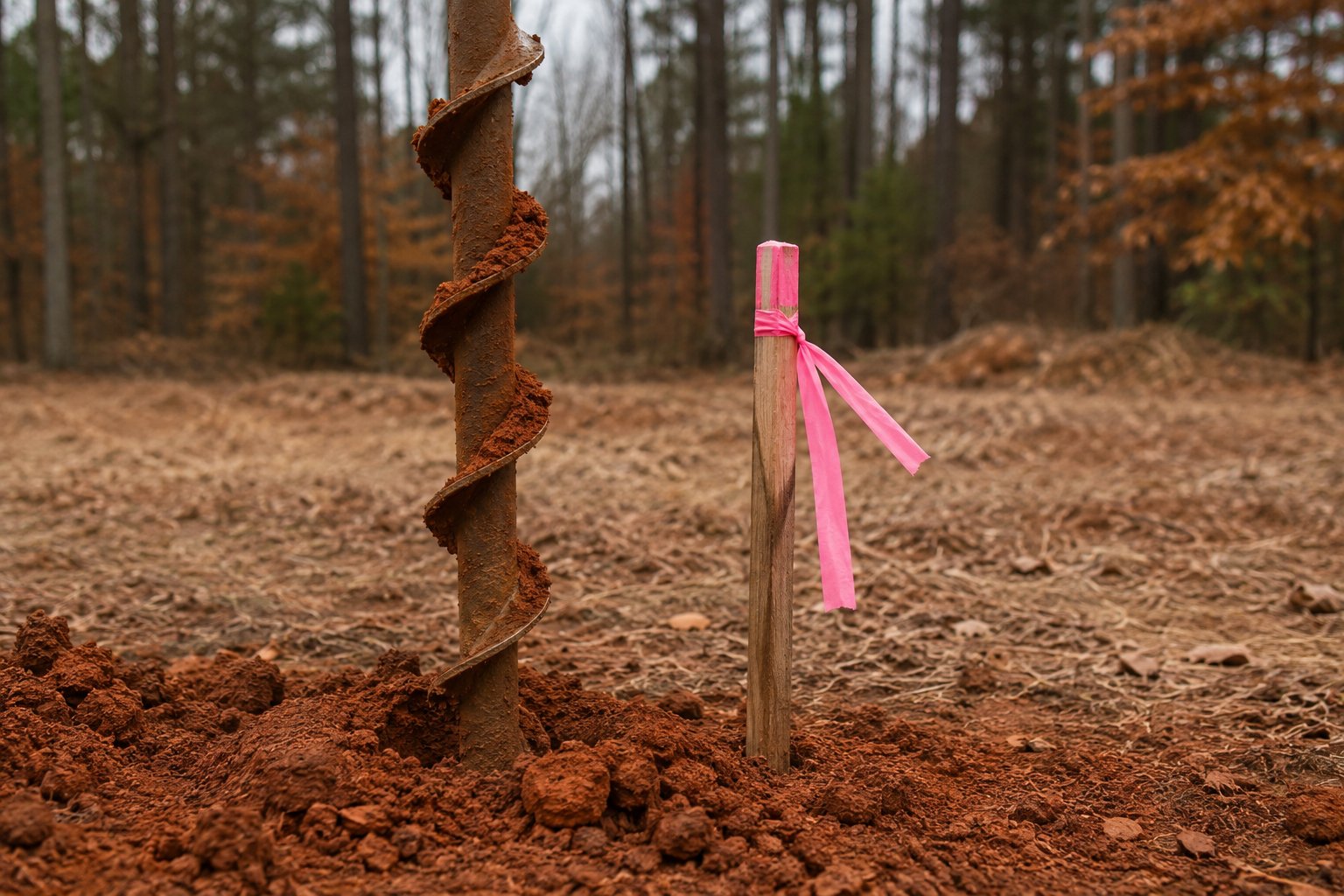
The land doesn’t care what’s on your Pinterest board
Soil type, slope, setbacks, easements, HOA architectural guidelines, tree cover, and where the sun sits in July are all quietly voting on what house can go where — before anyone has signed a single piece of paper.
A sprawling one-story house needs acreage the plan actually respects. A narrow infill lot in an established neighborhood is going to veto a wide three-car-garage layout no matter how much someone loves it on paper.
“The land doesn’t care what’s on your Pinterest board.”
Fall for a floor plan first, and there’s a real chance the land willing to hold it doesn’t exist anywhere near the budget, the school district, or the commute that actually matters.
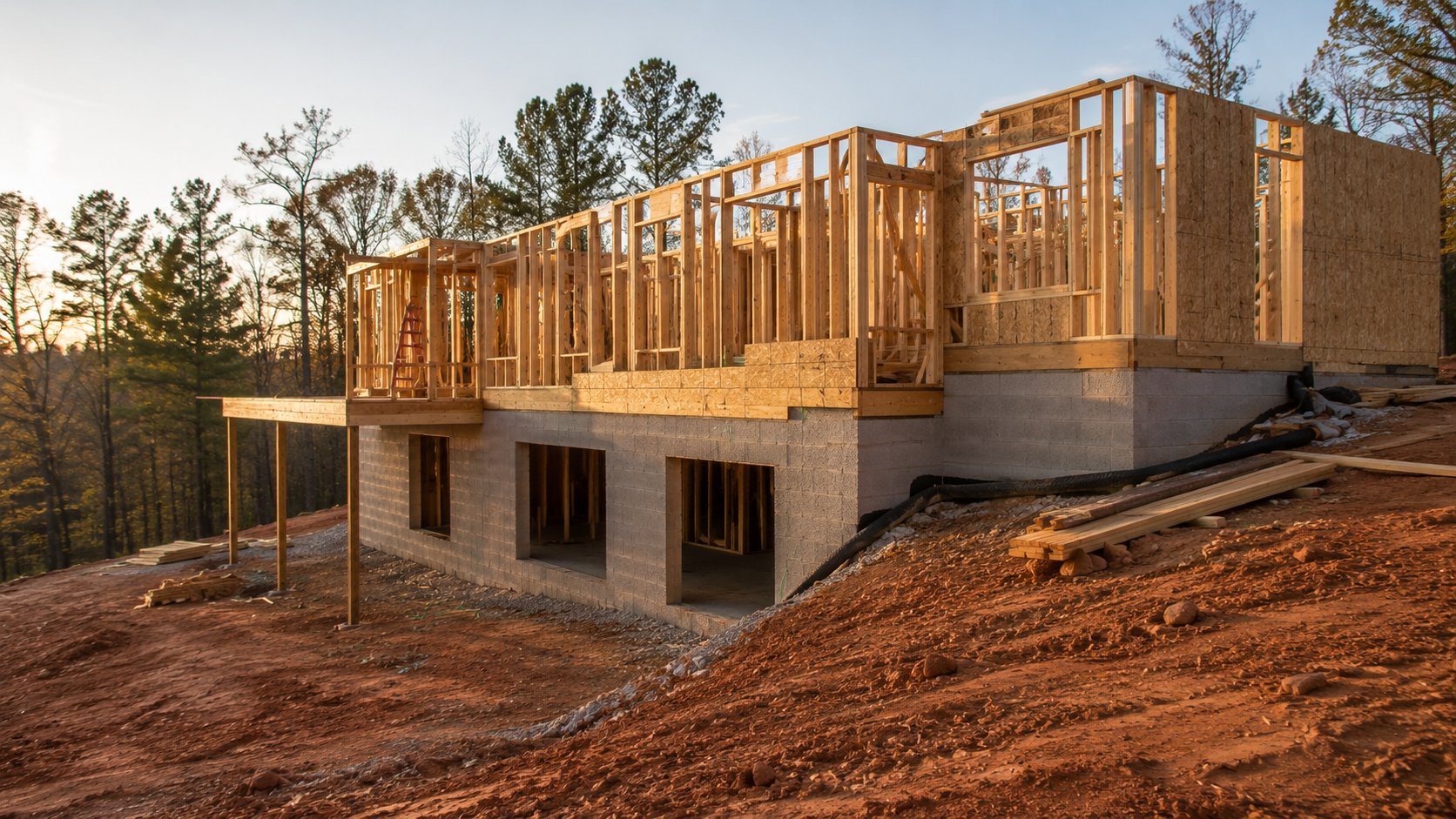
Topography decides more of the house than most buyers realize
Slope isn’t just a landscaping detail — it decides what kind of house is even on the table.
Walk-out basements
A true walk-out — full-size windows, a real door straight to the backyard, no steps down into the yard from inside — requires a lot with enough natural slope to make that grade change happen. A flat lot simply can’t produce one, no matter how much someone wants it.
Walk-up basements
A more modest slope supports a walk-up instead — exterior stairs cut into a partial grade. It works on more lots than a true walk-out does, and it’s the compromise a lot of buyers land on once the actual topography is in front of them.
Flat lots
A dead-flat lot usually means a standard basement with small egress windows, or pushes the conversation toward a slab or crawlspace instead. None of that is a downgrade — it’s just a different starting point, and it’s worth knowing before falling for a plan built around a walk-out that lot can’t deliver.
Style follows the same logic. A sprawling one-story ranch wants flat, generous acreage. A narrow two-story with a smaller footprint tolerates a tighter or more uneven lot far better. The land isn’t just deciding the basement — it’s nudging the whole silhouette of the house.
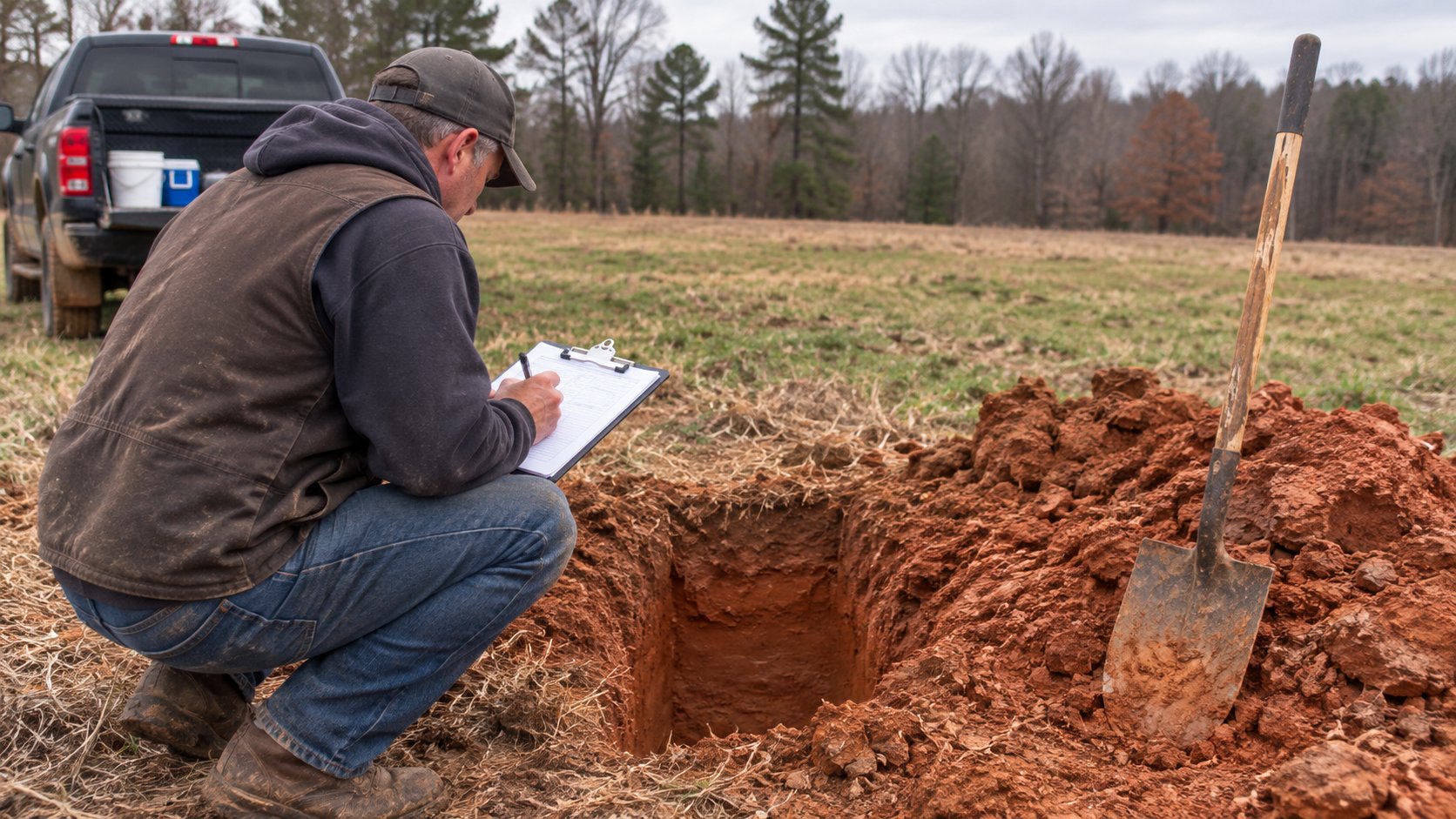
What’s happening underground matters as much as what’s on top
If a lot doesn’t have access to public sewer — which describes a lot of land in this part of Virginia — a septic system isn’t optional, and neither is the perc test that decides what kind.
Conventional systems rely on soil that absorbs and filters water well on its own. When the soil cooperates, this is the more affordable, more straightforward option.
Alternative systems — engineered options like pump systems or sand mounds — come into play when the soil doesn’t perc well enough for a conventional system. They work, but they cost meaningfully more, sometimes $15,000 to $30,000 more, depending on the soil and the county’s requirements.
This is exactly why any offer on land without public sewer needs a perc test contingency in writing — not “the seller says it perked years ago,” a current test from a licensed soil scientist, before contingencies come off.
Established, in-town neighborhoods flip this conversation. A lot with public sewer already running down the street doesn’t need a perc test — it needs a sewer tap, connecting the new home’s line into the existing system. That’s a real cost too, set by the locality, but a far more predictable one than a failed perc test can produce.
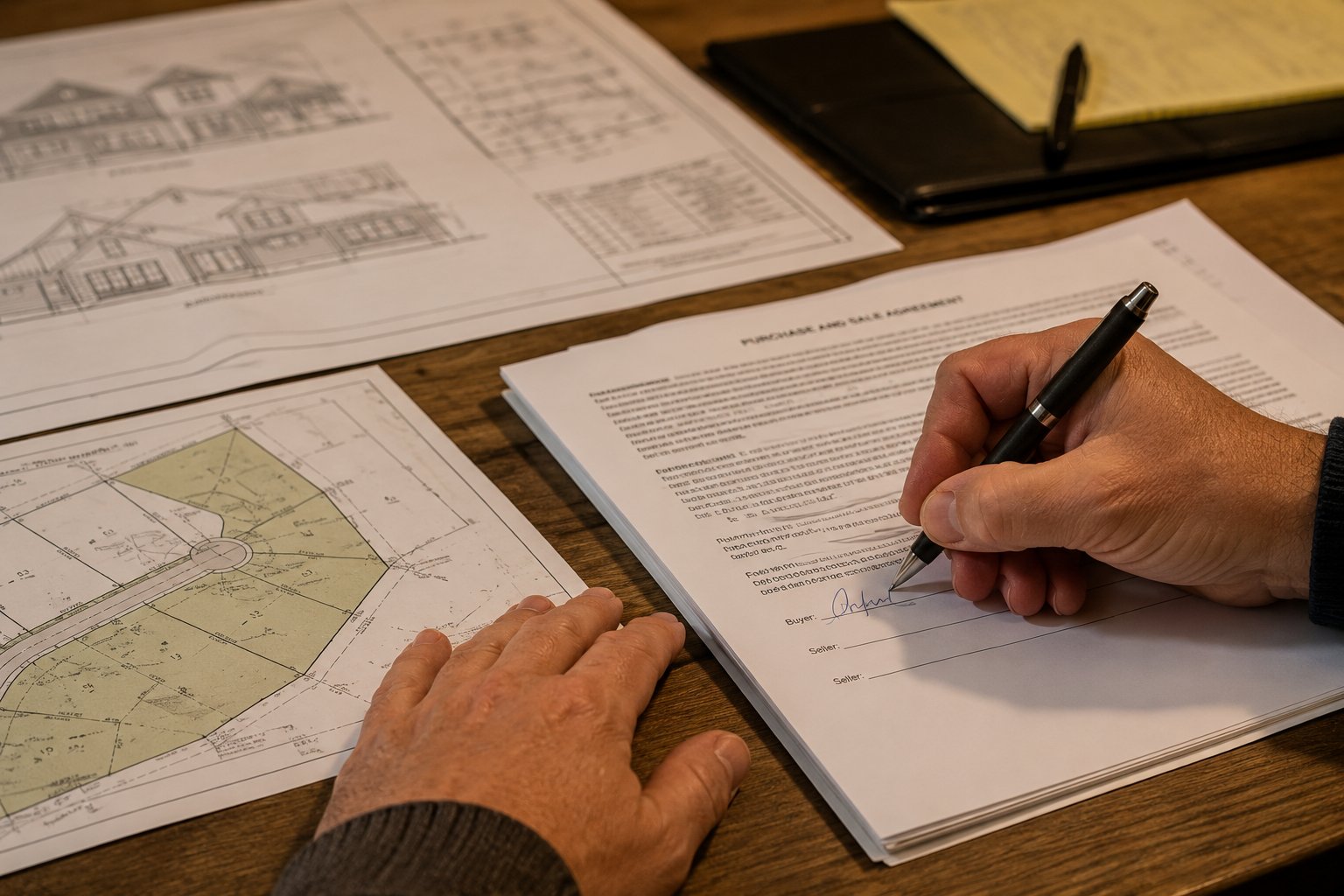
Buying the lot isn’t always the buyer’s move to make
Who actually purchases the land changes the whole shape of the deal, and it’s rarely talked about upfront.
Sometimes the buyer purchases the lot directly, then hires a builder separately. The buyer holds title from day one, signs the construction contract independently, and carries both the risk and the say over everything from the start.
Just as often — especially with production and semi-custom builders — the builder already owns the lot as part of a community they’re developing. That turns the purchase into a package deal, land and house together, usually through the builder’s own purchase agreement rather than a standard real estate contract. Title frequently doesn’t transfer until closing, sometimes not until the home is complete.
And sometimes it runs the other direction entirely — the buyer already owns the land, and goes looking for a builder afterward. That’s the version where the buyer is driving the timeline, not waiting on a builder’s release schedule.
None of these is the “right” way in. But knowing which one is actually happening changes what to expect from the contract, the timeline, and who’s really in the driver’s seat.
What else the land is hiding
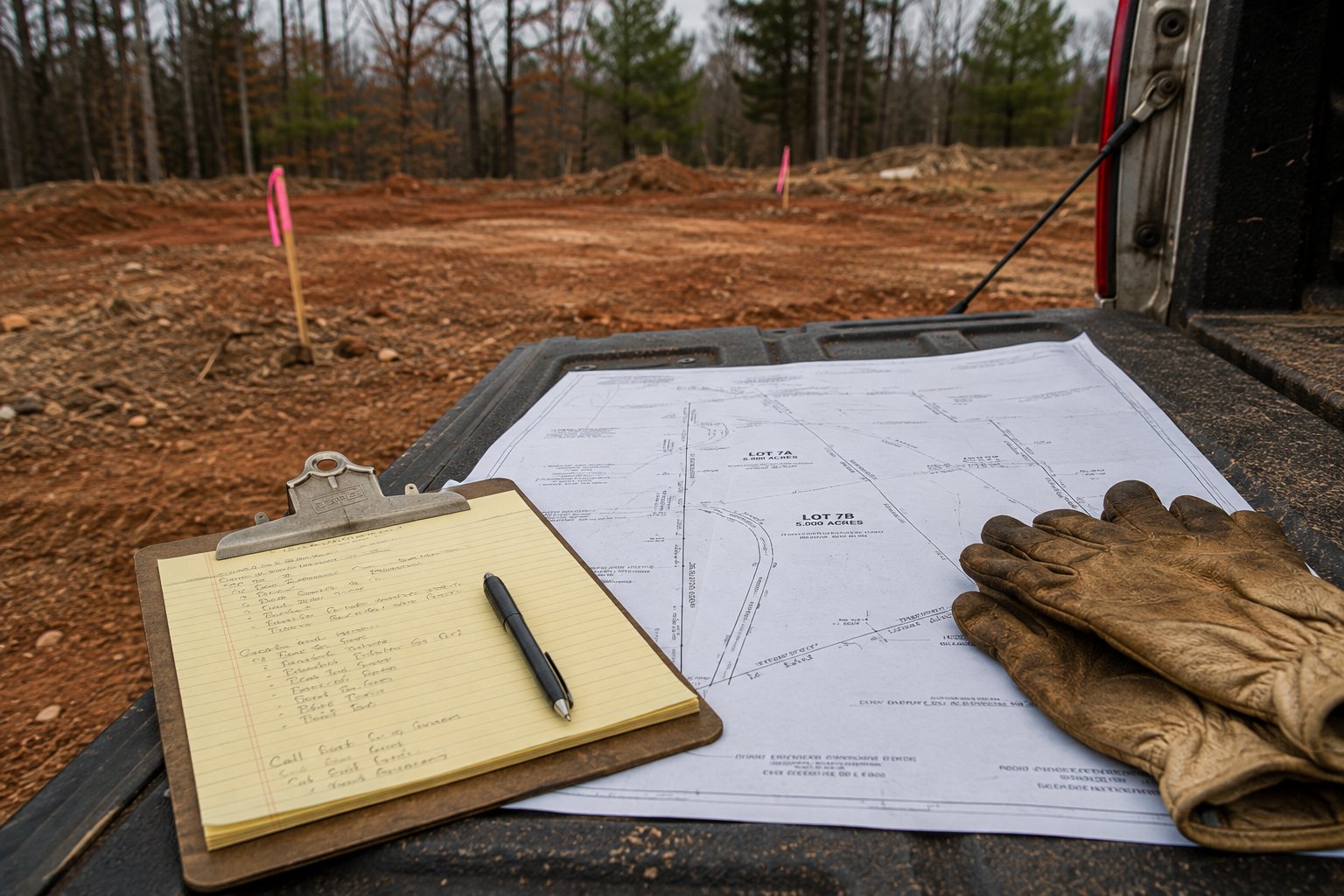
Beyond slope and septic, a handful of quieter issues catch buyers off guard almost every time:
-
Well water access & depth
Rural lots without public water need a well, and drilling cost swings widely depending on how deep the water table sits — a variable that’s specific to the lot, not a regional average.
-
HOA & architectural covenants
Some HOAs dictate far more than paint colors — roofline pitch, exterior materials, even square footage minimums. Worth reading before falling for a plan the covenants won’t allow.
-
Road frontage & easements
A lot on a private or shared road may come with maintenance agreements, access rights, or easement language that’s worth a real read, not a skim.
-
Utility extension costs
If power doesn’t already reach the lot, running it in can be a real number — distance from the nearest line matters more than most buyers expect.
-
Zoning & floodplain/wetlands
Zoning decides what can legally be built there at all, and floodplain or wetlands designation can restrict where on the lot a house can even sit — sometimes shrinking the buildable area more than the acreage suggests.
-
Tree clearing costs
A heavily wooded lot might be gorgeous and still carry a real clearing bill before anything else can start — worth pricing out before it’s a surprise line item.
But showing up with no plan wastes just as much time
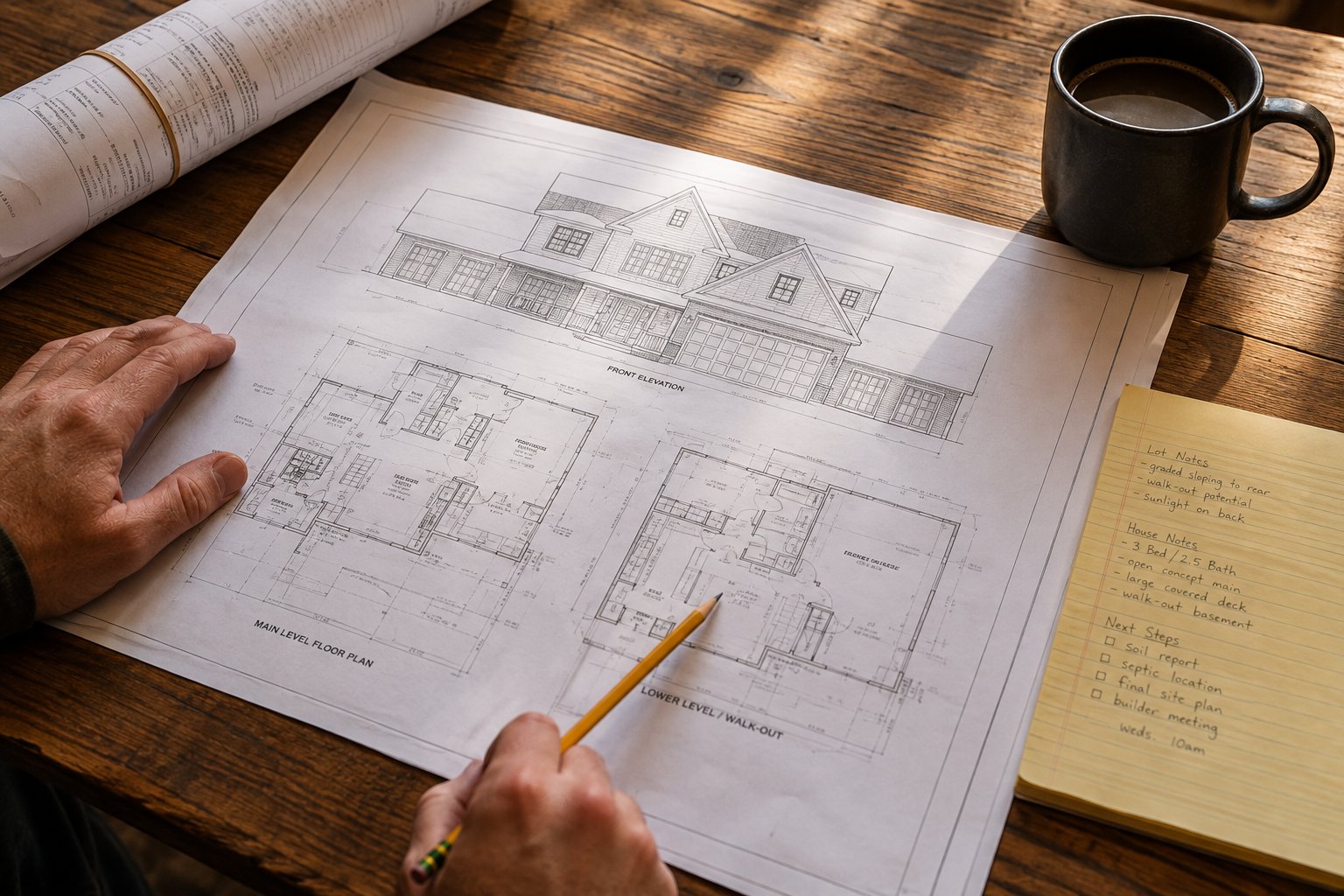
Here’s the flip side nobody warns you about: walking into land shopping with zero sense of size, budget, or style burns just as many weekends. Touring gorgeous lots that were never going to work — wrong price range, wrong shape, wrong everything — gets old fast.
A plan doesn’t have to be finished to be useful. It just has to be real enough to rule things out.
So which one actually goes first?
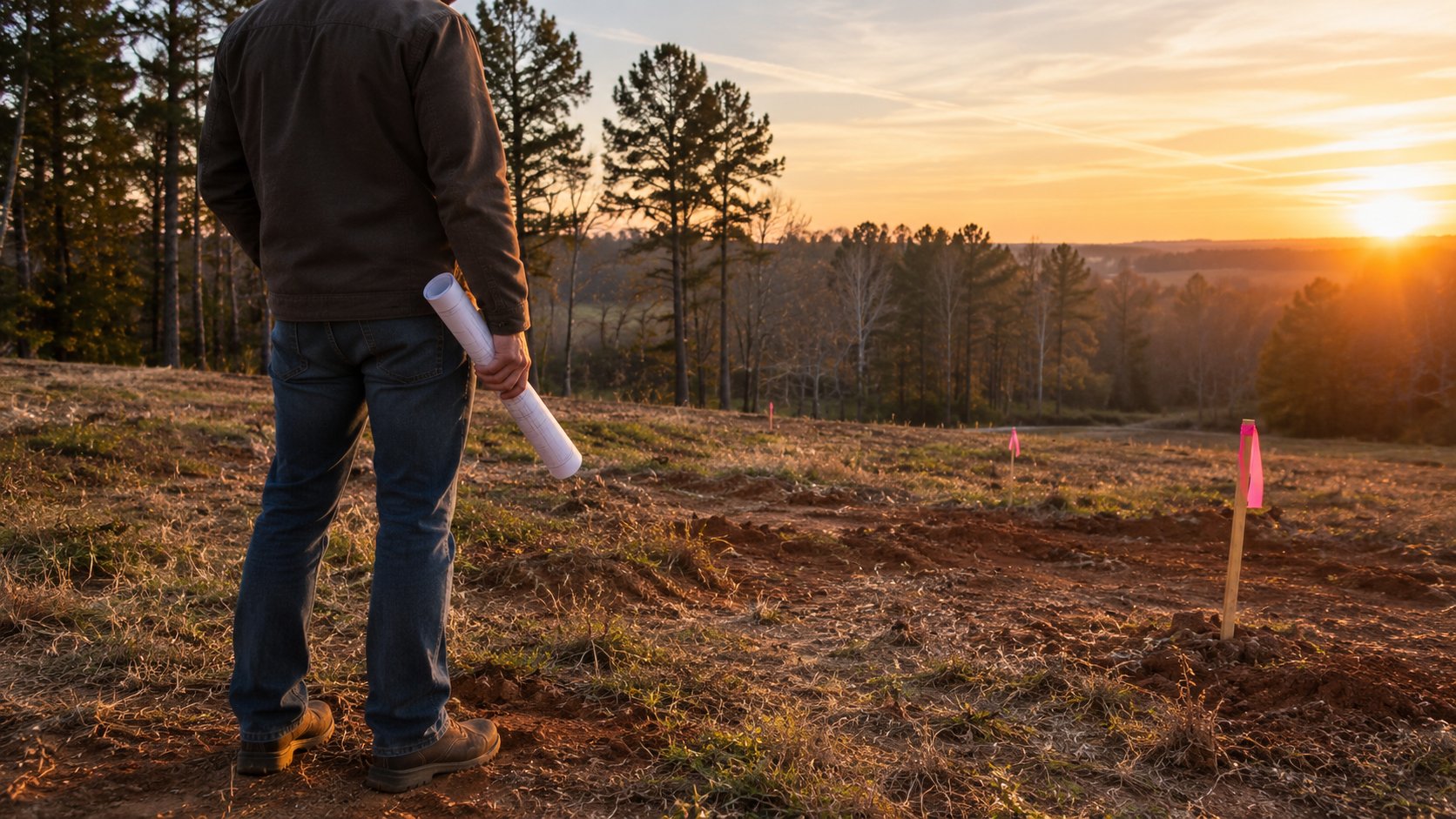
Neither, exactly — and both. The move that actually works is carrying a rough plan into the land search: square footage range, budget ceiling, the handful of must-haves that aren’t negotiable. Held loosely, like a starting position instead of a signed contract.
Once a specific piece of land is genuinely in play, that’s when the real plan conversation starts — shaped by what that ground will actually allow, not the other way around. Buyers who lock a floor plan first and go land shopping after are usually the ones back at the drawing board later. Not by choice.
Got Your Plans? Here’s How Much Say You Actually Get
Part Two picks up once plans are in hand — how much a builder will actually let you change, and why that has less to do with budget than most people assume.
